Streaming Services and the Film Industry
Introduction
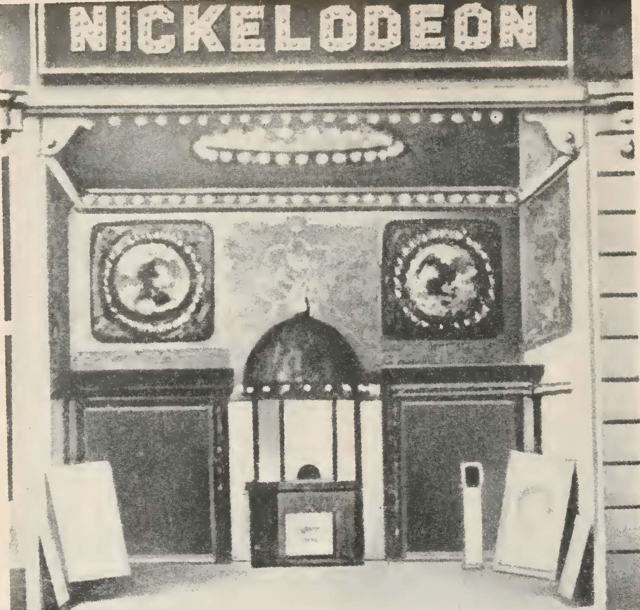
Throughout the history of motion pictures there have been many inventions that make the movie going experience better and better. When photography was first put in motion, films began. The first nickelodeon was created in 1905 in Pittsburgh, Pennsylvania. This then led to the modern movie theater that we think of today.
Jumping forward to the 21st century, streaming services have emerged which allow consumers to watch a movie or TV show at their fingertips. Streaming platforms such as Netflix, HBO, YouTube, Disney Plus, Amazon Prime Video and Hulu allow individuals to watch a video, movie or TV show for a low monthly cost. These platforms are now releasing original content for their consumers. Television networks have even take suit and are now offering apps with their TV shows to be watched on the go, such as PBS, ABC, Discovery Channel, NBC, Food Network and many more.
As streaming services continue to grow and release more content, worries arise that they will have an impact on the entertainment industry and movie theaters. There is no doubt that there are many movie goers all around the world. As technology becomes more a part of our lives there is no way to know what the future is going to hold.
The Impact on the Industry and Movie Theaters
Within the entertainment industry there is varying opinions on the true impact streaming services will have on movie theaters.

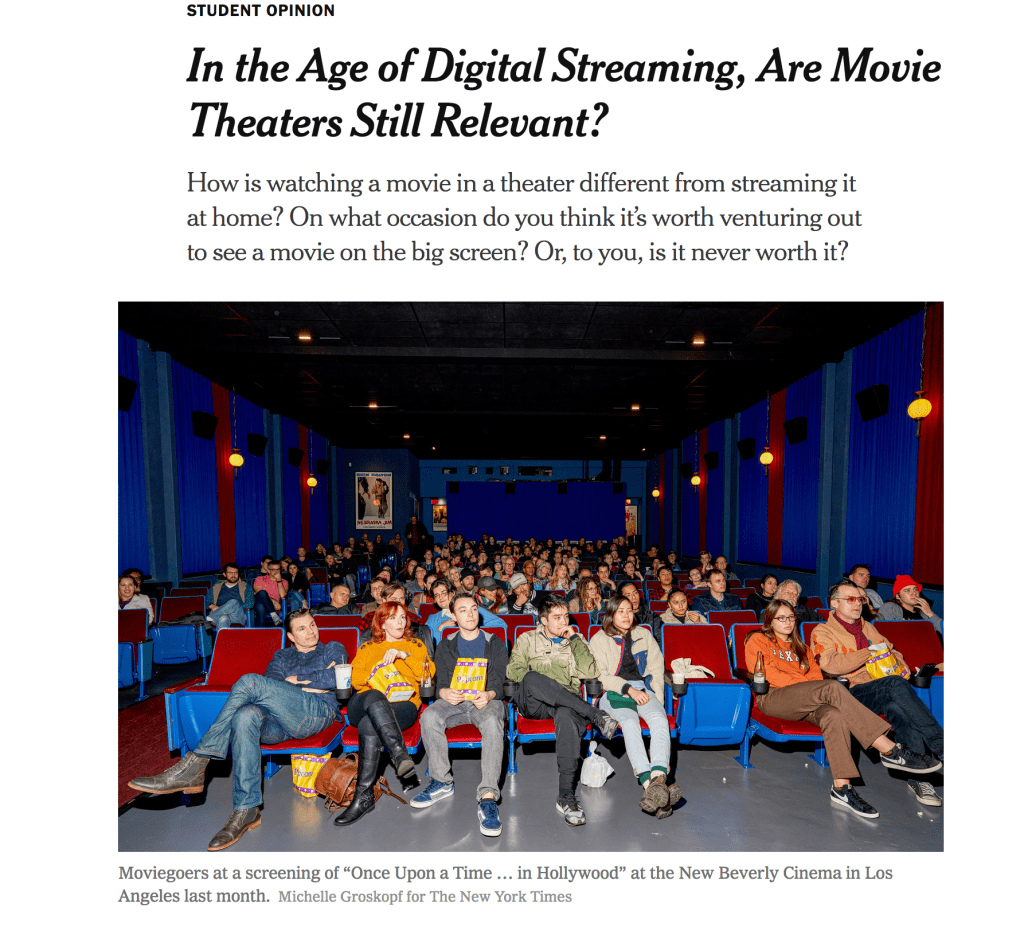
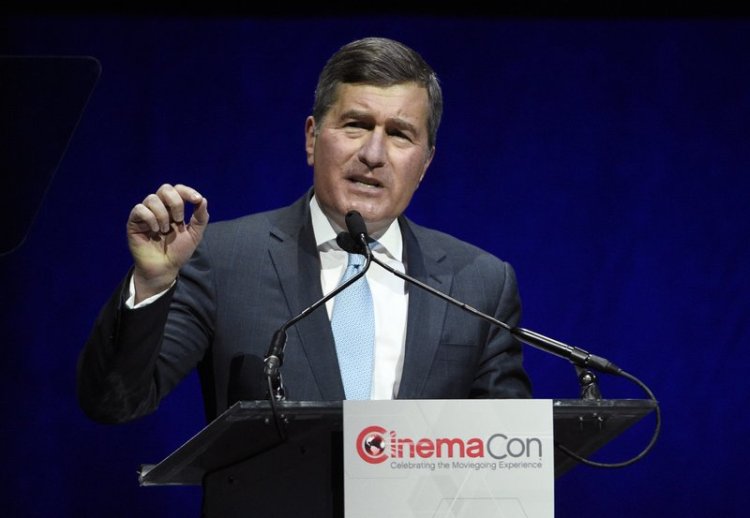
Charles Rivkin, the CEO of the Motion Picture Association of America announced at the 2019 CinemaCon, that Netflix will be joining the MPAA. Rivkin reassured that Netflix will not be the demise of movie theaters.
“Since that first Nickelodeon theater opened in Pittsburgh in 114 years ago, we’ve been hearing about our demise for more than a century, color pictures – they were definitely going to kill the movies. Then it was TV. Then basic cable. Expanded cable. The internet. The smartphone. 24-hour programming. Video games in every pocket. And yet – as Edna Mode, that wonderful animated character in ‘The Incredibles’ put it so well: ‘Here we are.’”
Charles Rivkin, CEO of MPAA, 2019 CinemaCon speech
The rise in streaming platforms has not had a direct impact on the domestic box office. In 2018 the box office hit a record-breaking year, with a 5% rise in movie tickets sold. According to CNBC, 75 percent of the population saw at least one movie in theaters. As people are still going to theaters they are also staying in the comfort of their own homes watching Netflix.
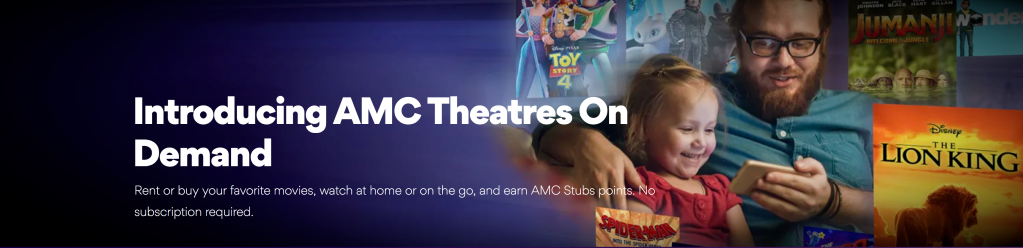
As streaming services are continuing to grow, AMC released a monthly subscription plan for access to three movies per week. In addition to this AMC has created an on demand services to bring movies to the home, just like other streaming competitors. Regal Cinemas has also followed suit and is now offering an unlimited movie ticket subscription plan at a monthly cost.
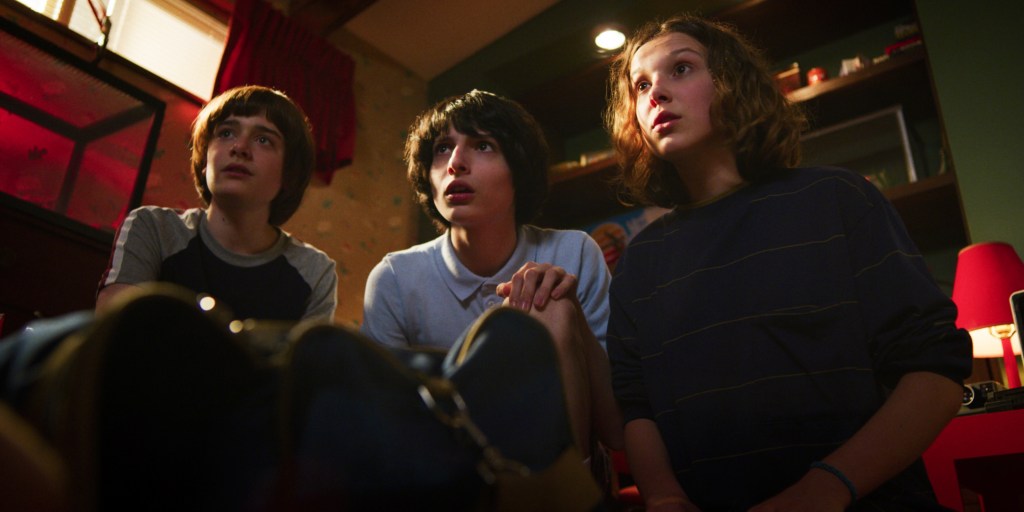
In 2019 Netflix spent $12 billion on programming. Netflix has released many original shows over the past couple years that have been great hits like Stranger Things, Black Mirror, Orange is the New Black, Ozark and many more. Netflix has changed the way we watch TV.
Now they are releasing movies that are getting the attention of many like Bird Box (2018), Roma (2018) and The Irishman (2019). These are all highly produced films that did not need a theatrical release. The Irishman was nominated for the Academy Award for Best Picture, Best Director and Best Actor in a Supporting Role.
Netflix has grown so large that other companies are taking suit. Amazon Prime Video is releasing content for their Amazon Prime consumers. The branding of Amazon and Netflix are geared to those who want to sit at home and enjoy a movie. I enjoy a lot of movies at the comfort of my own home and do love watching Netflix. I think that I am definitely in the majority with other consumers but as a filmmaker I wonder how major production studios are going to operate if subscription based platforms become more popular then movie theaters.
Ben Fritz, the author of the Big Picture, The Fight for the Future of Movies, discusses the future of film in regards to art and commerce. He was a guest on the podcast Knowledge@Wharton where he discusses this topic in depth.
“A lot of traditionalists are saying, “No, a movie is made to be seen in a theater. That is what a movie is.” That may be what the artists want, but that is not what a lot of consumers want. The movie business either has to adapt to that, or it’s going to continue to get creamed.”
A lot of consumers want to be able to watch hundreds of films and TV shows at a low monthly cost. Consumers can put on a movie when they get home from work and relax. Streaming services have catered to this need. As I think that this is absolutely great, the ease and convenience of streaming services may have a bigger impact then we know.
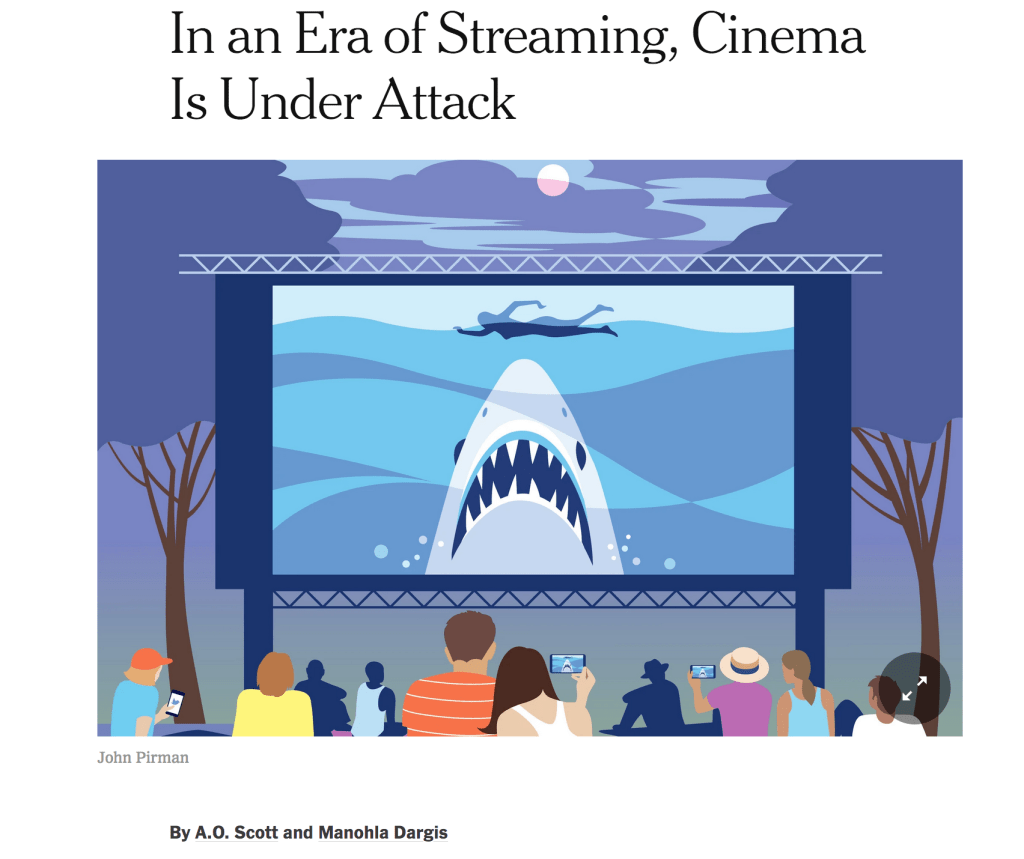
The chief New York Times film critics, A. O. Scott and Manohila Dargis, discussed whether or not the cinema is under attack. Dargis explained,
“This isn’t about movies versus television and whether one is superior to the other (the mediums have long influenced each other). It’s about larger, more difficult questions: What happens to movies if they are made to be watched only at home? Isn’t that television? What, then, is the cinematic? Because, in some important ways (including experientially), television is closer kin to radio than to cinema.”
The Filmmakers
Platforms like Netflix, HBO and Hulu have many blockbuster movies included in their subscription plan. However, they also have a lot of movies by independent filmmakers. Independent films are feature or short films that are not produced within a large studio and is distributed by other independent production companies. Most of the time these films have smaller budgets and have much more freedom in what can and cannot be produced.
There are some independent filmmakers that feel as though theatrical distribution is the way to go. With this a director can publicize their film with Q&A’s, events and reviews. This is an especially great way for up and coming directors to get their names out there, that in some ways Netflix lacks. Theatrical releases allow a film, that is in many ways a work of art, to be viewed in the best way possible. There is nothing that compares to movie theaters screens and surround sound.
Netflix does not have the same theatrical release system that is currently in place in major studios. Netflix does promote their films on their platforms, social media and in ads. There is no doubt that a lot of their original films have been featured on late night talk shows and other news outlets. Due to Netflix’s very large reach, they have the ability have their algorithms in place so that a filmmaker’s film will reach the right consumers.
I think that the argument can be made on both sides but ultimately Netflix and other subscription based services do have the ability to spread a film across platforms, especially their own. Emerging filmmakers may have to accept the need for streaming services due their ability to give many filmmakers a platform that they otherwise would not have had.
Director Steven Spielberg explains his stance on the future Netflix will have on movie theaters and filmmakers in an interview with ITV News. Within this interview Spielberg explains that a lot of studios today would rather make branded, guaranteed box office hits instead of take chances on smaller films like they did in the past. He is concerned for the future of movie goers and sees the current struggle for smaller and more independent films.
Back in 2016, Sean Parker released the Screening Room, which would bring movies that are in the theaters into homes. The movie would be available to watch for $50 for 48 hours with a $150 device needed to stream the first-run films. The National Association of Theater Owners, said that theater chains would have to decide whether or not they would back Parker’s business model.
AMC theaters agreed to this plan as well as directors, Ron Howard, Steven Spielberg, Martin Scorsese and J.J. Abrams, to name a few. On the opposing side Christopher Nolan, Jon Landau and James Cameron spoke out about their thoughts on Screening Room. Landau exclaimed,
“Both Jim and I remain committed to the sanctity of the in-theater experience. For us, from both a creative and financial standpoint, it is essential for movies to be offered exclusively in theaters for their initial release. We don’t understand why the industry would want to provide audiences an incentive to skip the best form to experience the art that we work so hard to create.” – Jon Landau
As a filmmaker I completely agree with Landau. There is absolutely nothing like going to the movies and viewing a piece of art. In many homes people do not have the best television equipment to really have the full experience of a film. There are a lot of viewers who even use their phones and computers to watch movies. Nothing compares to watching a movie in a theater.
Conclusion
Not as many people go to the movie theaters as they have in the past. As streaming services and other devices continue to grow, there is no telling how many people will go to the theaters. It just comes down to who truly values the cinematic experience and wants to continue to help movies be viewed in this format.
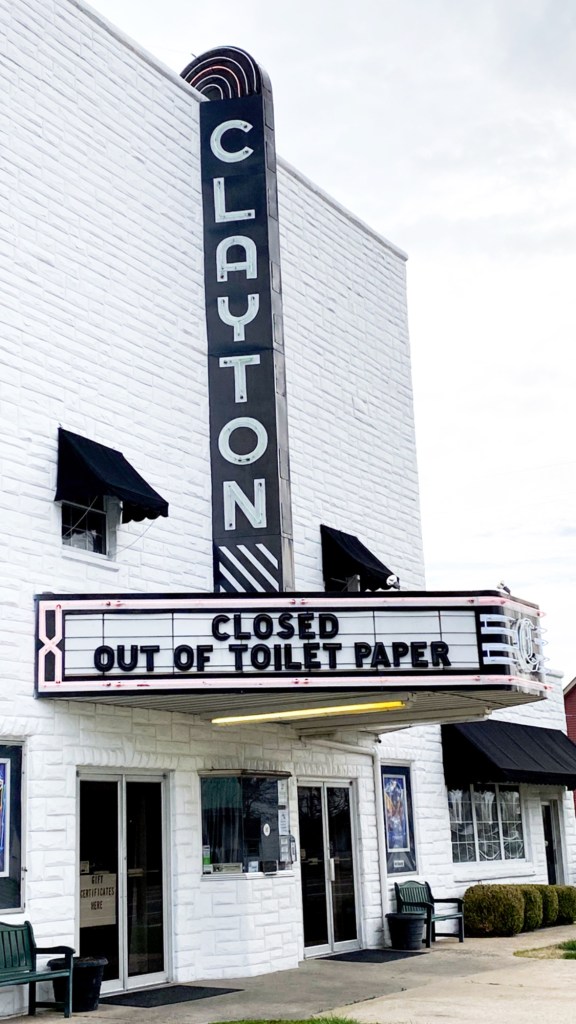
The current coronavirus outbreak has put many hardships across the country and world. The United States economy is taking hardships each day the stay at home order is in place. Movie and television productions have been halted. Some movie theaters across the country are struggling remaining closed during this outbreak.
Without the box office and current productions, smaller studios may have a harder time to fund future productions without the influx of income that comes from the constant flow of movie productions. Studios that are part of large conglomerates will most likely emerge fine when social distancing is over.
The CEO of MPAA Charles Rivkin, discussed the economy of the film industry during the beginning stages of the coronavirus outbreak. He explains how the movie industry generates many jobs for the American people.
Universal announced that they would make a few of their movies available to rent for $20. This is very similar to Sean Parker’s Screening Room. His innovation that was looked down upon is now being embraced due to the current climate of the nation. The stay at home order allows people to watch more movies than ever before. Movies allow audiences to escape into another world and dive deep into a story.
Movies and television series have been helping many through these troubling times. World War I gave birth to the roaring twenties. There were many technological advancements, social gatherings and new ways of thinking. The economy rose giving light to these new innovations. I believe that the same is in store for the rest of the world after the covid-19 pandemic. Movies may be changed forever. New stories are going to be told and people will want to jump right back to theaters after they have been in their homes for so long. As Charles Rivkin stated,
“The movie industry is a reflection of our society” Charles Rivkin
The movie industry will reflect our society after we emerge stronger after such trying and troubling times.
Resources
Can Hollywood Survive Streaming Services? (2018, May 4). Retrieved from https://knowledge.wharton.upenn.edu/article/can-hollywood-survive-streaming-services/
Feldman, D. (2019, July 29). How Netflix Is Changing The Future Of Movie Theaters. Retrieved from https://www.forbes.com/sites/danafeldm=an/2019/07/28/how-netflix-is-changing-the-future-of-movie-theaters/#1fdb47ad5f46
First nickelodeon opens. (2009, November 13). Retrieved from https://www.history.com/this-day-in-history/first-nickelodeon-opens
Lang, B. (2016, March 16). Christopher Nolan Comes out Against Screening Room (EXCLUSIVE). Retrieved from https://variety.com/2016/film/news/christopher-nolan-comes-out-against-screening-room-exclusive-1201732057/
McClintock, P. (2019, April 2). MPAA Chief Embraces Netflix in Address to Theater Owners. Retrieved from https://www.hollywoodreporter.com/news/mpaa-chief-embraces-netflix-cinemacon-address-1198778
O’Falt, C. (2017, May 24). 3 Key Questions for Indie Filmmakers Building a Career in the Age of Netflix and Amazon. Retrieved from https://www.indiewire.com/2017/05/indie-film-career-streaming-theatrical-netflix-amazon-1201830821/
Rosenberg, A. (2020, March 19) Once we get through the coronavirus, our movie culture may look very different. Retrieved from https://www.washingtonpost.com/opinions/2020/03/19/will-coronavirus-kill-off-movie-theaters/
Scott, A. O., & Dargis, M. (2016, April 29). In an Era of Streaming, Cinema Is Under Attack. Retrieved from https://www.nytimes.com/2016/05/01/movies/in-an-era-of-streaming-cinema-is-under-attack.html
Wayne, M. L. (2017, October 13). Netflix, Amazon, and branded television content in subscription video on-demand portals. Media, Culture & Society, 40(5), 725-741
Whitten, S. (2019, April 8). Netflix isn’t killing movie theaters: Viewers who stream more also go to cinemas more. Retrieved from https://www.cnbc.com/2019/04/08/netflix-isnt-killing-theaters-people-who-steam-more-see-movies-more.html
by Megan Dodson
Check out my website Megan Dodson Productions where you can see my films!
 streamingfilms.movie.blog